What Makes a Site Sacred?
Our ancestors and their ancestors before them understood the importance of sacred places. For thousands of years, people have gone on pilgrimages or vision quests to seek answers to questions, to gain inspiration, receive prophecies or other messages about what direction their lives should follow. Today, with the very future of life on earth in serious jeopardy, it’s never been more important to hear the message we can receive at places of power.
The power of most sacred places was first recognized long ago by shamans or other sensitive people, who realized that a particular site was blessed by an unusually high concentration of natural energy. Such energy can be caused by underground mineral deposits, underground water, reflected energy from surrounding areas, a combination these factors, and other little-understood factors. Through usage by humans or animals, places further absorb different kinds of energy.
In his book Sacred Earth: Places of Peace and Power
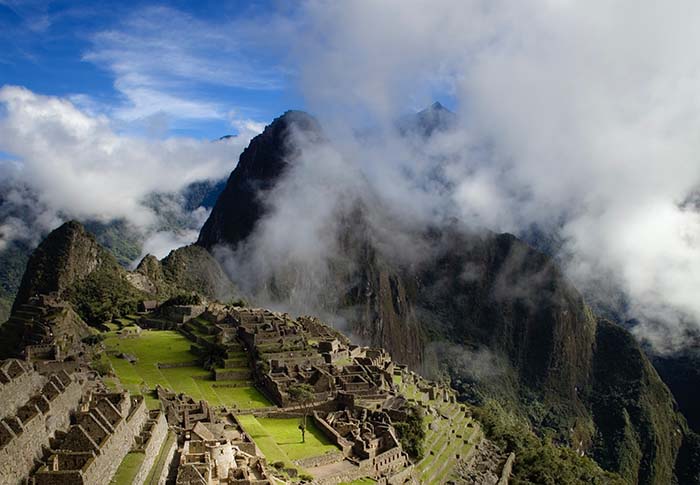
- Ancient ceremonial sites, such as Machu Picchu in Peru
- Ancient astronomical observatories, such as Stonehenge in England
- Sacred mountains, such as Kailash in the Himalayas
- Human-built mountains, such as the Great Pyramid in Egypt
- Sacred bodies of water, such as Lake Titicaca, on the border of Peru and Bolivia
- Oracle sites, such as Delphi in Greece
- Labyrinth sites, such as Glastonbury Tor in England
- Sacred islands, such as Iona in Scotland.
Some people believe that Earth herself is a living being who speaks to us at sacred places. Martin Gray is an explorer, anthropologist and photographer who visited over 1000 sacred sites in more than 80 countries over a 20 year period. During these pilgrimages he gained the ability to receive direct communications with a spirit of the Earth. “In ancient times,” he said, “many cultures knew it was possible to communicate with living, non-human entities, of which the Earth is the oldest and wisest.”
As editor and publisher of Power Trips magazine for more than two years, I was amazed to discover how many prophecies, visions, inspirations and other important messages pilgrims have received at sacred places. I invite you to explore this NewAgeTravel.com website at your leisure to discover more about the sacred places of Mother Earth.
Which Places are the Most Powerful?
 When I was in Peru in June, 1998, I had the rare opportunity of meeting Anton Ponce de Leon Paiva. Anton is a native Peruvian who was taken blindfolded to a hidden village in the Andes and taught the true sacred history of not only the Incas but of all the Americas. Anton is the author of The Wisdom of the Ancient One

Helene A. Shik, is a psychic healer and spiritual teacher who operates Purple Mountain Tours. She suggests that different sacred places “call” to people at different times, depending on what your individual needs at the time may be. Therefore, even though a place may be very powerful, it may not be the most appropriate place for you.
According to Dr. Jean Shinoda Bolen, author of Crossing to Avalon
I don’t think any reference book exists that lists “all” the sacred places on Earth, but I have found two books that certainly include long lists, plus a lot of other good information: Places of Peace & Power by Martin Gray and the Atlas Of Holy Places & Sacred Sites
How to Decide Which Place You Should Visit
As you know, different sacred sites have different energies, which are picked up by one of the body’s chakras. According to many ancient traditions, the human body has seven energy centers or chakras, and they correspond to different emotions or aspects of our personality. They are:
- The first or Root chakra, near the base of the spine, deals with primary issues: survival and safety.
- The second or Sexual chakra, near the pubic bone, corresponds to sexuality, plus home and family.
- The third or Sun chakra, near the solar plexus, below the breast bone, is for identity, place and self.
- The fourth or Heart chakra, near the center of the chest, connects with love, relations, connections.
- The fifth or Throat chakra, deals with communication and self-expression.
- The sixth or Third Eye chakra, in the center of the forehead, is for wisdom and seeing the truth.
- The seventh or Crown chakra, at the top of the head, is for spirituality and connection to higher power.
Contrary to popular belief, the chakras are not doors or valves which open or close. They cannot become blocked, but they can be stimulated to help us balance our overall well-being. If someone is having trouble understanding who she or he really is, it can help to stimulate chakra #3, etc. Some people who suffer traumas at a young age find they need work on their Throat chakra to help them be able to express their emotions.
Remarkably, you don’t need to know any of this in order to benefit from travel to sacred places. You do not need to know, for example, that (a) you need work on your heart chakra, and (b) Lake Titicaca is a heart chakra site that might be helpful for you. The wonderful human mind/body system seems to do all this for us automatically. Here’s how it works…
Suppose you go to a travel presentation where you see several hundred slides, taken at twenty different sites in a dozen different countries. It’s likely that one or two pictures will really “jump out” at you. They may seem especially interesting, or beautiful, or dramatic. Perhaps you’ll feel “shivers” when you see them. If this happens, you’re getting a signal about where you need to go.
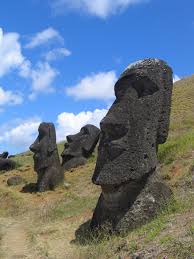 It happened for one man when he was simply walking down the street one day, not thinking about going anywhere. He was walking by the window of a travel agency when a poster in the window caught his eye. It was of the giant stone statues on Easter Island. He suddenly felt an unexplained urge to go to Easter Island. Even more amazing, a short time later, he happened to receive a free airline ticket to South America! Taking advantage of this remarkable serendipity, he went to Easter Island, where he received a message telling him what direction his life should take.
Most people never experience events quite so dramatic, but we can learn to become more sensitive to images that we feel unexplained attractions to. Try going to the library or a bookstore and thumbing through travel books to see if anything catches your eye. Or, “surf” through the many different web pages in this web site and see which ones you feel most interested in. Who knows where this journey might eventually lead you?
How to Prepare for Transformational Travel
Modern transportation has made a huge difference in how people make pilgrimages to sacred places. Before the automobile and the airplane, a pilgrimage was something that took extensive preparation. It was a serious commitment. Today, it’s possible to stop off at a sacred site during an otherwise ordinary vacation. Maybe that’s why some people who visit places of power come home disappointed that they didn’t get more out of their experience.
The Stein Valley was a traditional vision quest site for the First Nations living in southwestern British Columbia. When an adolescent boy or girl was ready to come of age, he or she would have extensive study sessions with an elder or shaman, in preparation for a vision quest. There were important rituals to perform immediately before setting out into the canyon to receive a vision. These might include bathing and other cleansing rites, prayer and fasting. The neophyte might have to walk for several days to get to the powerful river, where they hoped to receive visions of guidance for their lives.
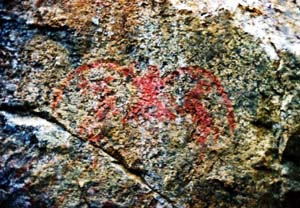
It took my wife and me about three hours to drive to the Stein Valley from Vancouver. When we arrived at the trailhead, we stopped at “Asking Rock,” where niches contained tobacco, sweet grass and other offerings left by visitors who knew this is a traditional place to pray for a safe journey. We stopped, respectfully, letting the rocks and the river know that we appreciated them, but we did not perform any specific rituals. After several hours of moderate hiking, we arrived at our destination, one of the single largest rock writing sites in Canada. Over 160 images, painted in red ochre (most of which are now very faded) are on a 50-foot long section of rock near a bend in the Stein river. We could feel the energy of this powerful place, but we saw none of the spirits that had inspired the rock paintings.
When I was in Machu Picchu, I met a Peruvian shaman who had a powerful vision during his apprenticeship. He sat and meditated for six days, looking out at the sacred mountain, Putu Cusi. It was toward the end of his sixth day that he saw a glowing sphere rise up from the Urubamba River toward him. He was engulfed by the sphere, which took him inside Putu Cusi, where he saw an incredibly beautiful crystal city. I sat on the grass and looked out toward Putu Cusi for several minutes. Not surprisingly, I saw no glowing spheres nor crystal cities.
I have heard stories about people who innocently traipsed into sacred places and had powerful, extraordinary experiences there, but I don’t believe such events happen very often. I believe that, in most cases, the strength of an experience you have at a sacred place is directly proportional to how much energy you put into your visit.
Fasting, drumming, chanting and the use of hallucinogenic herbs are some of the traditional ways that aboriginal people have made contact with the spirit world, but these techniques may be difficult, dangerous, inappropriate, or even illegal for today’s pilgrims.
Openness is the attitude that Dr. Jean Shinoda Bolen suggests will help pilgrims benefit from the energy at sacred places. You should be humble and cooperative, willing to “go with the flow” of whatever you may encounter. Pilgrimages invite synchronicity, but they won’t do you any good if you don’t take advantage of whatever opportunities may suddenly present themselves to you.
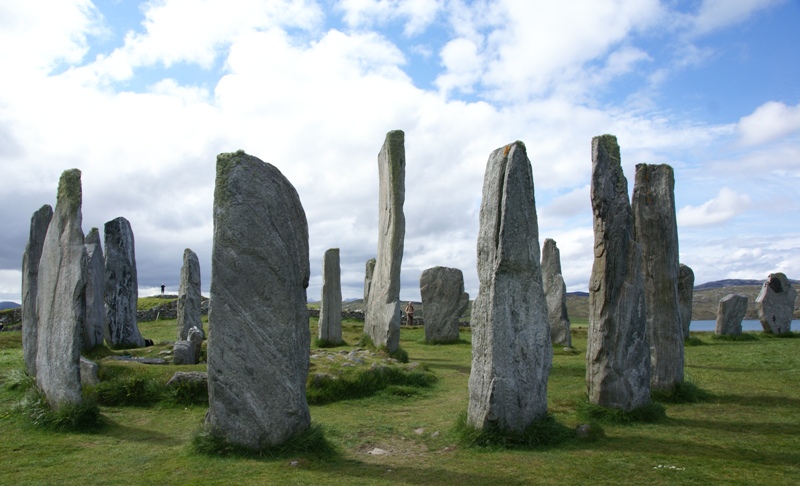 Helene Shik told me about one of the most powerful and moving experiences ever to happen to her in fifteen years of leading tours to sacred places. She was on the isle of Lewis in Scotland, where she had been leading a group through the Callanish stone circle. It was getting dark, and the group was loading onto the bus, but she stayed behind to stand and thank the stones. She suddenly went into almost a trance, and it seemed as if the stones came alive. She saw that each of the tall stones had a face with human features, and she felt their guardian spirit energy. One of them spoke, saying: “Thank you for coming and for walking all over the planet in the ancient, sacred way,” it told her. “I knew then,” Helene told me, “that this was the meaning of being a pilgrim and not just a tourist who simply uses but doesn’t give back respect.”
Of course, if you travel as part of an organized group “pilgrimage”, your tour leaders or guides will very likely give you more specific information about how to prepare for the places you’re going to visit. If you get a reading list ahead of time, this is an excellent way to get ready. Knowing some of the history and mythology about a place will greatly enhance your appreciation when you go there in person.
The best technique I have yet to learn for getting in touch with sacred places is what Martin Gray calls Planetary Acupuncture. It is an easy-to-learn exercise in breathing and meditation, and I recommend it to everyone…
A Simple Breathing Exercise You Can Use to “Tune in” to Unseen Energies
Martin Gray is an explorer, anthropologist, photographer and the author of the book Sacred Earth: Places of Peace and Power
Martin says that this technique can be practiced anywhere, and any time, but it is best both for you and the Earth if you do it outside, sitting directly on the Earth.
Close your eyes and control your breathing, so each breath is long, slow and soft, with each inhalation and exhalation of equal length. The technique consists of a series of three in-and-out breaths:
The first time you inhale, visualize that you are taking in celestial energy — the spirit of Heaven — in through the crown chakra at the top of your head, and into your heart chakra. When you exhale, visualize that you have added energy from your own heart, and you are sending it down through your root chakra, at the base of your spine, and down into the Earth.
With your second breath, visualize that you are taking in terrestrial energies — the spirit of the Earth — up through your root chakra and into your heart. When you exhale, visualize that you have added energy from your heart, and you are sending the energies up through your crown chakra, and into the Heavens.
With your third breath, visualize that you are simultaneously taking in both celestial energy and terrestrial energy into your heart. When you exhale, visualize that you are sending out all three energies — celestial, terrestrial, and your own — radiating it out from your heart in every direction, and giving it out to everything and everyone around you.
Repeat this series of three breaths for a minimum of ten times every time you do it. Martin Gray says, “The more you practice this technique, the deeper you will experience a connection with the living Earth.”
You can learn more about Martin Gray at his website: http://www.sacredsites.com.
Finally, if you visit a sacred place and experience a prophetic, inspirational, visionary or other non-ordinary event, I would very much like to hear about it. If you would like to share it with other visitors to NewAgeTravel.com, check out our guidelines for contributors. Or, you can contact me by email using our Contact page.